
Storefront Door Will Not Lock at Closing Time in Maryland
A storefront door that will not latch, deadlock, or secure correctly at the end of the business day is usually a hardware, alignment, key, or access-control problem that needs to be identified before any part is replaced. The useful first step is to separate a simple operating issue from a damaged component. 911 Locksmith serves Severn and communities across its listed Maryland service area during posted business hours. Call (240) 512-8126 to describe what the lock, key, door, or car is doing and arrange service.
- 4.9 on Google
- Licensed, bonded and insured
- Serving Maryland since 2013
- We come to your address
Why a storefront door will not lock
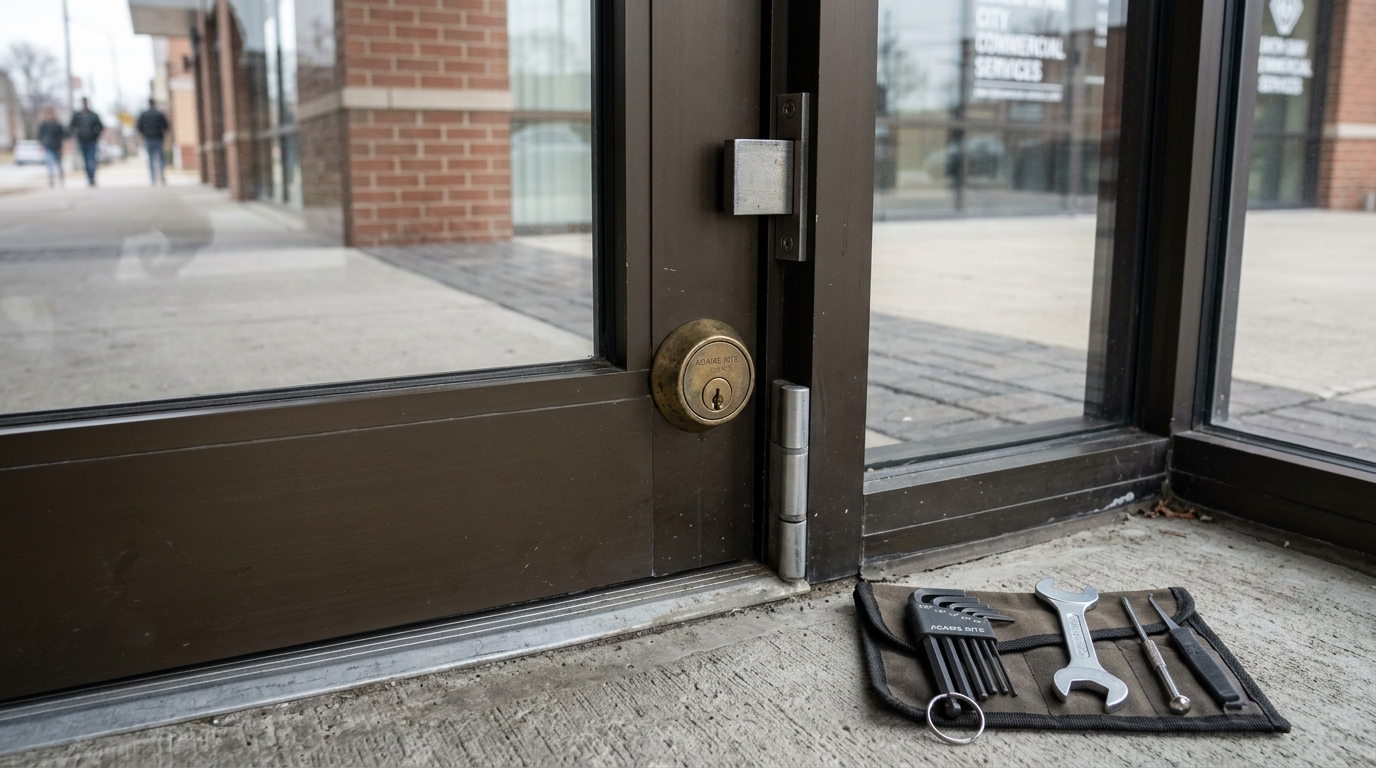
The most common causes include door sag, a shifted frame, worn pivots, damaged weather stripping, a misaligned Adams Rite-style lock, loose hardware, or an electric-strike problem. Two problems can produce the same symptom, so replacing the first visible part is not always the correct repair. A locksmith should look at the complete operating sequence, identify where resistance or communication fails, and explain the available options before work begins.
It also helps to know what changed before the door stopped locking. A door that locked well until a change in season points toward frame movement or alignment. A door that has been slamming or drifting short of the frame points toward the closer. A problem that started after a lock or cylinder change points toward the new hardware or how it was set. Those details narrow the fault and reduce unnecessary replacement.
Safe checks before scheduling service
Before applying force or taking hardware apart, do not force the key, inspect the door gap, test the lock with the door open, check the closer action, and document visible damage. These checks may reveal an obvious cause and give the locksmith better information. Stop if the key bends, the lock makes a new grinding sound, the door cannot close safely, or continued testing could damage the glass, frame, or hardware.
Safe Inspection Checklist
- Take one clear photo of the lock, key, door edge, dashboard message, or damaged area.
- Write down the brand or car year, make, and model when visible.
- Confirm that you are authorized to request entry or changes to the property or car.
- Keep broken pieces and working spare keys available for inspection.
What a locksmith checks on a storefront door
The service visit should begin with the symptom you reported, followed by inspection and testing. Depending on the result, the work may involve storefront alignment, lock and cylinder repair, strike adjustment, closer service, mortise hardware work, or replacement of failed components. The goal is to correct the confirmed failure while preserving serviceable hardware when that is practical.
On a storefront door, the lock and the door are checked together. The locksmith looks at whether the bolt throws fully with the door open, whether it lines up with the strike in the frame when the door is closed, how the door hangs on its pivots or hinges, and whether the closer brings it fully shut. On doors with an electric strike or other access control, the electric part is checked separately from the mechanical lock.
Adjustment, repair, rekeying, or replacement
Many storefront doors that will not lock need adjustment rather than new parts: realigning the door, resetting the strike, tightening loose hardware, or adjusting the closer. Repair or replacement of the lock body or cylinder makes sense when internal parts are worn or broken, or when the lock no longer matches what the door needs. Rekeying the cylinder is a separate decision from fixing the lock; it is worth considering when keys have been lost or staff have changed. A clear estimate should state which option is proposed and why.
Storefront doors and Maryland weather
Aluminum storefront frames expand and contract between hot, humid summers and cold winters, so a door that locks easily in one season can bind or leave a gap in another. Daily customer traffic wears pivots, hinges, and closers faster than on a home door, and a door that is pulled against the wind or propped open during the day puts extra strain on the closer. In shopping centers and leased spaces the door hardware may belong to the landlord, so it helps to know who is responsible before work is approved.
Signs the storefront lock problem is getting worse
A storefront lock usually gives warning before it stops securing the door. Watch for a key that turns only when someone pushes or pulls the door, a bolt that drags or stops short, a door that has to be lifted to line up, a closer that slams or leaves the door short of the frame, scraping at the threshold, or a gap that changes between the top and bottom of the door. A problem that shows up only at certain times or in certain weather still matters, and it is easier to diagnose while the lock still works part of the time.
Do not wait until the door cannot be secured at closing time. Note whether it locks with the door open, whether it locks when the door is held tight against the frame, whether it fails with every key, and whether the closer or an electric strike behaves differently than usual. Specific observations are more useful than describing the lock as simply broken.
What not to do with a storefront lock
Do not force the key or turn it with pliers to move a bolt that is binding; that can break the key or the cylinder cam. Do not hammer the bolt or strike into place, remove or loosen the closer, or wedge the door shut overnight in a way that keeps the lock from engaging. Do not change exit hardware or anything that affects how the door opens from inside without checking the fire and building code requirements for the space. These actions can turn a serviceable problem into damaged hardware, broken glass, or a door that no longer meets its intended safety function.
How the service decision is made
The correct service should match the confirmed cause. If testing shows door sag, a shifted frame, worn pivots, damaged weather stripping, a misaligned Adams Rite-style lock, loose hardware, or an electric-strike problem, the locksmith can explain which adjustment, repair, rekey, or replacement addresses that cause. The proposed work should also account for the age and condition of the surrounding components. A new cylinder will not fix a door that sags on worn pivots, and adjusting the strike will not help if the closer never brings the door fully shut.
Ask for the scope before approving work: which part is being serviced, what will remain, how many keys or credentials are included, and how the completed work will be tested. Testing should include closing the door with the closer alone, locking and unlocking with every authorized key, and checking that the door still opens normally from inside.
Access, identification, and authorization
Locksmith work involves controlled access. The person requesting service should be ready to show identification and reasonable proof of authority for the home, business, managed property, or car. Commercial requests may require confirmation from an owner, manager, leaseholder, or designated keyholder. If the documents are inside the locked property, explain that when scheduling so the available proof and access situation can be discussed before work begins.
Planning the appointment
When calling about a storefront door that will not latch, deadlock, or secure correctly at the end of the business day, provide the city, the type of door and lock, whether it locks with the door open, whether a closer or an electric strike is involved, and when the space needs to be secured. Mention if the door contains glass or if a landlord manages the hardware. Clear information helps reserve the correct service window and prepare for the likely hardware without promising a diagnosis before inspection.
Keeping a storefront door locking correctly
Have the pivots, hinges, and closer checked when the door starts to drag, slam, or stop short of the frame, rather than waiting for the lock to fail. Keep the threshold and the bottom of the door clear of debris, and do not prop the door open by wedging the closer arm or the frame.
Keep a written record of who holds keys, and collect keys when staff leave. If the door has an electric strike or access control, note any change in how it behaves and mention it with the lock problem.
Information to have ready
- Your city and the type of property or car
- The exact symptom and when it began
- Any recent key, lock, battery, door, or access changes
- The lock or key brand when known
- A working callback number and preferred appointment window
Frequently asked questions
Why does the door lock when it is open but not when it is closed?
That usually means the bolt is not lining up with the strike in the frame. Door sag, worn pivots, or a shifted frame are common causes, and an adjustment often solves it.
Does the lock need to be replaced?
Not automatically. Alignment, the closer, or a loose strike can stop a door from locking while the lock itself is still sound.
Should we rekey if keys are missing?
If keys are lost or a former employee still has one, rekeying the cylinder changes which key operates it. That is a separate decision from fixing why the door will not lock.
Who needs to approve the work?
Commercial work may require approval from the owner, manager, leaseholder, or designated keyholder. In a leased space the landlord may own the door hardware, so check the lease before approving changes.
How do I arrange service?
Call 911 Locksmith at (240) 512-8126 during the business hours posted on the website and explain the symptom, location, and the door and lock hardware.
Related Services & Local Resources
More Business Lock Problems
What customers say about 911 Locksmith
Google reviews from homeowners, drivers and businesses across Maryland.
Need help with this?
Need help with a storefront door that will not latch, deadlock, or secure correctly at the end of the business day? Call 911 Locksmith at (240) 512-8126 or use the website contact form to request an appointment during posted business hours.