
House Key Broke Inside the Lock in Severn, MD
Part of a house key lodged inside a knob, lever, deadbolt, mailbox lock, or other residential cylinder is usually a hardware, alignment, key, or access-control problem that needs to be identified before any part is replaced. The useful first step is to separate a simple operating issue from a damaged component. 911 Locksmith serves Severn and communities across its listed Maryland service area during posted business hours. Call (240) 512-8126 to describe what the lock, key, door, or car is doing and arrange service.
- 4.9 on Google
- Licensed, bonded and insured
- Serving Maryland since 2013
- We come to your address
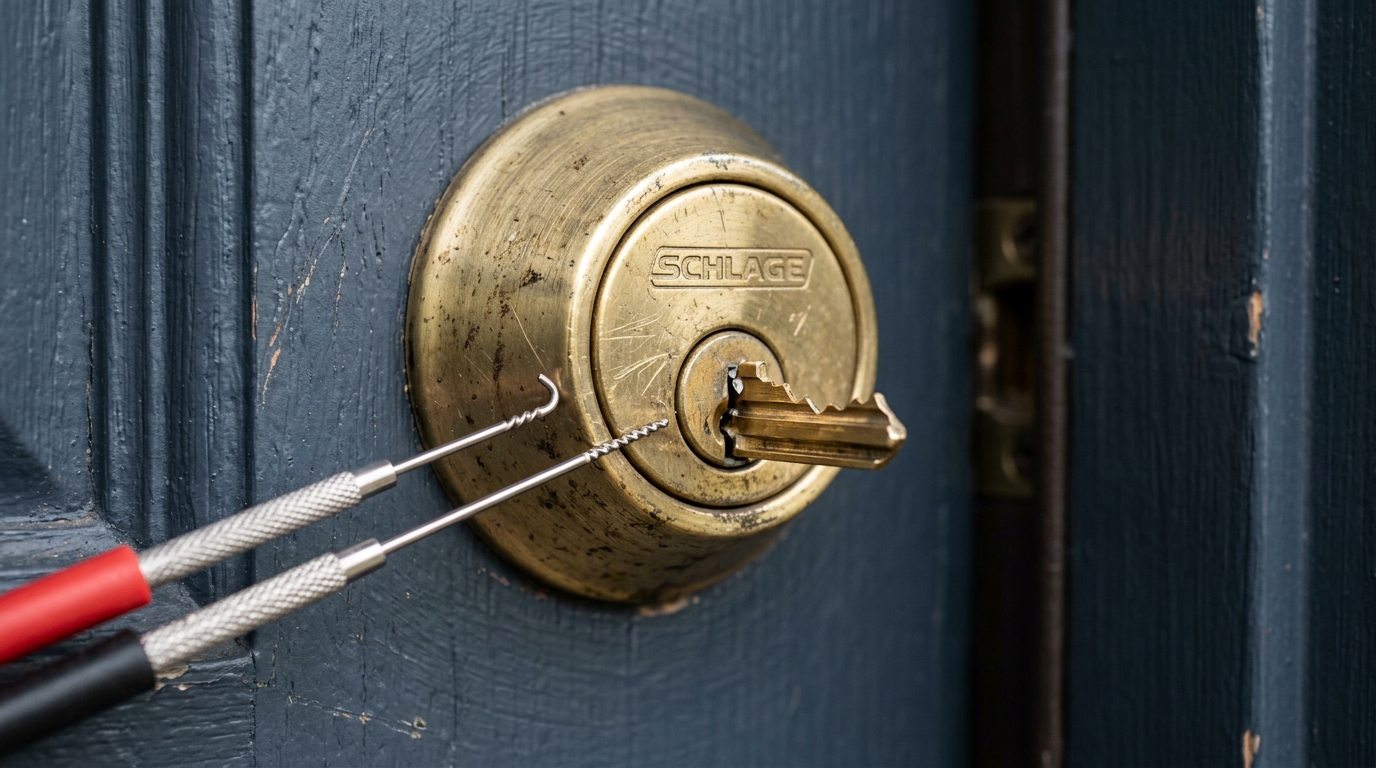
Why a house key breaks inside the lock
The most common causes include a cracked or duplicated key, a dry or worn cylinder, misalignment that makes the key carry extra force, or twisting the key while the lock is binding. Two problems can produce the same symptom, so replacing the first visible part is not always the correct repair. A locksmith should look at the complete operating sequence, identify where resistance or communication fails, and explain the available options before work begins.
It also helps to know what happened before the key broke. A key that had been getting harder to turn points toward a dry or worn cylinder or a door that is out of alignment. A key that broke the first time it was used often points toward a poor copy or a cracked blank. Those details narrow the fault and reduce unnecessary replacement.
Safe checks before scheduling service
Before applying force or taking hardware apart, stop turning the remaining key piece, avoid glue and sharp improvised tools, check if another secured entrance is available, and keep both pieces of the key. These checks may reveal an obvious cause and give the locksmith better information. Stop if the remaining piece moves deeper into the lock, the cylinder starts to turn loosely, or the door cannot be closed and secured.
Safe Inspection Checklist
- Take one clear photo of the lock, key, door edge, dashboard message, or damaged area.
- Write down the brand or car year, make, and model when visible.
- Confirm that you are authorized to request entry or changes to the property or car.
- Keep broken pieces and working spare keys available for inspection.
What a locksmith checks when a key breaks in the lock
The service visit should begin with the symptom you reported, followed by inspection and testing. Depending on the result, the work may involve controlled key extraction, cylinder inspection, lock repair, rekeying, key cutting, or replacement when internal parts are damaged. The goal is to correct the confirmed failure while preserving serviceable hardware when that is practical.
The first check is where the broken piece sits: whether part of it still shows at the face of the cylinder or it has moved deeper past the pins, and whether the lock stopped in the locked or unlocked position. The locksmith also checks the cylinder for damage from the break and the door for alignment problems that made the key work harder. The broken pieces matter too, because a clean break from a worn or poorly copied key often shows why it failed.
Extraction, repair, rekeying, or a new lock
In many cases the broken piece can be extracted without removing the lock from the door, and the lock keeps working with a new key. If the break or the extraction damaged the pins or the cylinder, the cylinder may need repair. Rekeying changes which key operates the existing cylinder; it is worth considering when the broken key was a copy from an unknown source or when you are not sure who holds keys to the home. Replacement makes sense when the lock is worn out, badly damaged, or no longer does the job the door needs. A clear estimate should state which option is proposed and why.
Broken keys in Severn homes
Keys can break in front-door deadbolts and knobs, and also in storm-door locks, sliding-door locks, and mailbox locks, which use smaller cylinders and thinner keys. Summer humidity and winter cold make a worn cylinder stiffer, so a key that already needs extra force is more likely to break in those seasons. Copies made from copies are another common cause, because each generation loses a little accuracy and the lock needs more force to turn. For a mailbox in a shared cluster box, check with the property manager or the post office first, since the lock may not belong to the resident.
Warning signs before a key breaks
A key rarely breaks without warning. Watch for a key that needs wiggling or pushing in and out before it turns, a key that drags on the way out, a bent or twisted blade, a fine crack near the shoulder of the key, or a lock that turns only when the door is pulled or pushed. Each of these puts extra twisting force on the key.
If one key in the household works smoothly and another does not, the problem may be the copy rather than the lock. Note which keys and which door are affected, and whether it happens more in hot, humid, or cold weather. Specific observations are more useful than describing the lock as simply broken.
What not to do with a broken key
Do not use super glue to try to pull the broken piece out; glue can run into the cylinder and turn a simple extraction into a lock replacement. Do not push the remaining part of the key back in to turn the lock, and do not dig at the keyway with pins, knives, or screwdrivers, which can push the piece deeper or damage the pins. Do not spray household oil into the lock. Keep both parts of the key, because they help identify the key and the cause of the break.
How the service decision is made
The correct service should match the confirmed cause. If testing shows a cracked or duplicated key, a dry or worn cylinder, misalignment that makes the key carry extra force, or twisting the key while the lock is binding, the locksmith can explain which adjustment, repair, rekey, or replacement addresses that cause. The proposed work should also account for the age and condition of the surrounding components. A new cylinder will not stop the next key from breaking if the door is out of alignment and the key is still being used to pull the bolt into place.
Ask for the scope before approving work: which part is being serviced, what will remain, how many keys are included, and how the completed work will be tested. Testing should include locking and unlocking with the door open and closed, using every key that is meant to work.
Access, identification, and authorization
Locksmith work involves controlled access. The person requesting service should be ready to show identification and reasonable proof of authority for the home, business, managed property, or car. Commercial requests may require confirmation from an owner, manager, leaseholder, or designated keyholder. If the documents are inside the locked property, explain that when scheduling so the available proof and access situation can be discussed before work begins.
Planning the appointment
When calling about part of a house key lodged inside a knob, lever, deadbolt, mailbox lock, or other residential cylinder, provide the city, which door or lock is affected, the type of lock, whether the broken piece is still visible, and whether another entrance can be secured. Mention if the door contains glass or if the home is a rental or managed property. Clear information helps reserve the correct service window and prepare for the likely hardware without promising a diagnosis before inspection.
Preventing another broken key
Replace keys that are bent, cracked, or worn smooth before they fail, and have new copies cut from a good original rather than from a worn copy. Use the key to turn the lock, not to pull the door closed. If the deadbolt only turns when you push, pull, or lift the door, have the strike or the door alignment adjusted.
A cylinder that feels gritty or stiff can be cleaned and treated with a lubricant made for locks instead of household oil. Keep a working spare where you can reach it if a key breaks while you are outside.
Information to have ready
- Your city and the type of property or car
- The exact symptom and when it began
- Any recent key, lock, battery, door, or access changes
- The lock or key brand when known
- A working callback number and preferred appointment window
Frequently asked questions
Can a broken key be removed without replacing the lock?
Often, yes. A broken piece can usually be extracted from the keyway with the proper tools, and the lock can keep working with a new key if the cylinder was not damaged.
Should I try to pull the piece out myself?
If the end of the key is clearly sticking out, gently gripping it with tweezers may work. Avoid glue, and stop if the piece moves deeper into the lock.
Can a new key be made after the old one broke?
Usually. Keep both parts of the broken key, because they help identify the key. A key can also be made to fit the lock itself.
Should I rekey after a key breaks?
Rekeying is not required just because a key broke. Consider it if the broken key was a copy from an unknown source or if you are not sure who has keys to the home.
What proof may be required?
Be prepared to show identification and reasonable proof that you live at the home or are authorized to request work on it.
How do I arrange service?
Call 911 Locksmith at (240) 512-8126 during the business hours posted on the website and explain the symptom, location, and which lock is affected.
Related Services & Local Resources
More Home Lock Problems
What customers say about 911 Locksmith
Google reviews from homeowners, drivers and businesses across Maryland.
Need help with this?
Need help with part of a house key lodged inside a knob, lever, deadbolt, mailbox lock, or other residential cylinder? Call 911 Locksmith at (240) 512-8126 or use the website contact form to request an appointment during posted business hours.